
Find what you expose, before attackers do.
Domains, subdomains, hosts, services and public-facing infrastructure, mapped from a single root domain. Surface uncovers what is reachable, unmanaged or simply forgotten, and keeps the inventory current.
- Agentless
- Starts from one domain
- Continuous refresh
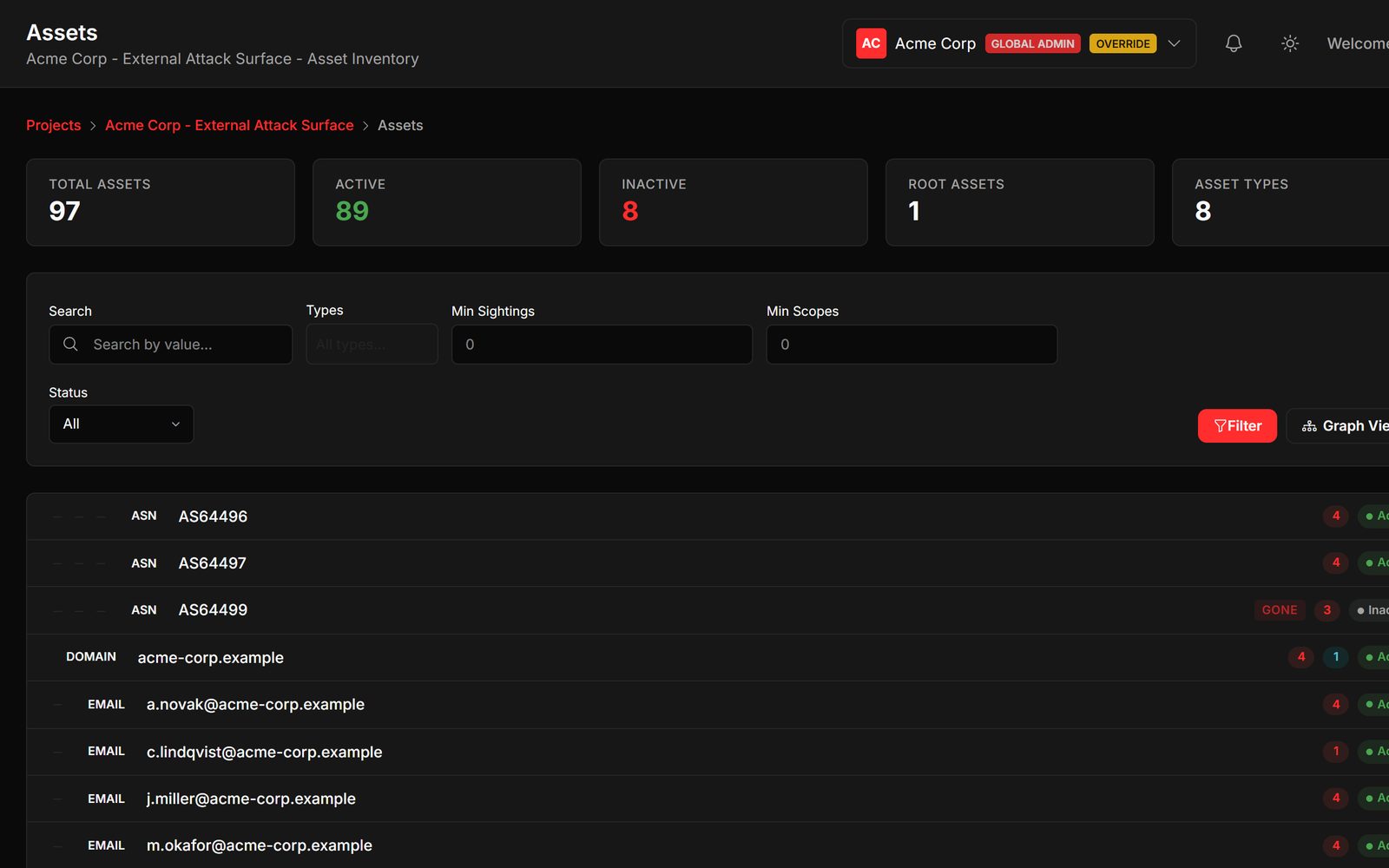 97 assets from one domain
Active, inactive & gone
Organizations add external assets faster than they inventory them. Domains get registered, subdomains are forgotten, services get exposed and infrastructure moves. Every unknown asset is a blind spot, and the first place an attacker will look.
From one domain to the full picture.
Add a root domain as scope. Surface finds what hangs off it, resolves where it lives, fingerprints what it runs and flags what needs a closer look.
Start with what you own.Add a root domain as scope. Anything marked as an exclusion stays out of scanning and discovery.
Every kind of asset on your internet-facing edge.
Discovery covers the asset types that expand your external exposure, and links them together so you can see how one leads to the next.
Turn unknown exposure into actionable visibility.
Discovery isn’t about producing a longer list. It shows where exposure exists, where unmanaged assets hide and where deeper assessment should start.
See how every asset connects.
The asset graph links each root domain to its subdomains, IPs, networks and services, so you understand how public-facing infrastructure adds up to your attack surface.
- Neighborhood view: click any node to see what sits around it.
- Sightings & last seen: know how often, and how recently, an asset showed up.
- Active, inactive, gone: retired infrastructure doesn’t silently disappear from view.
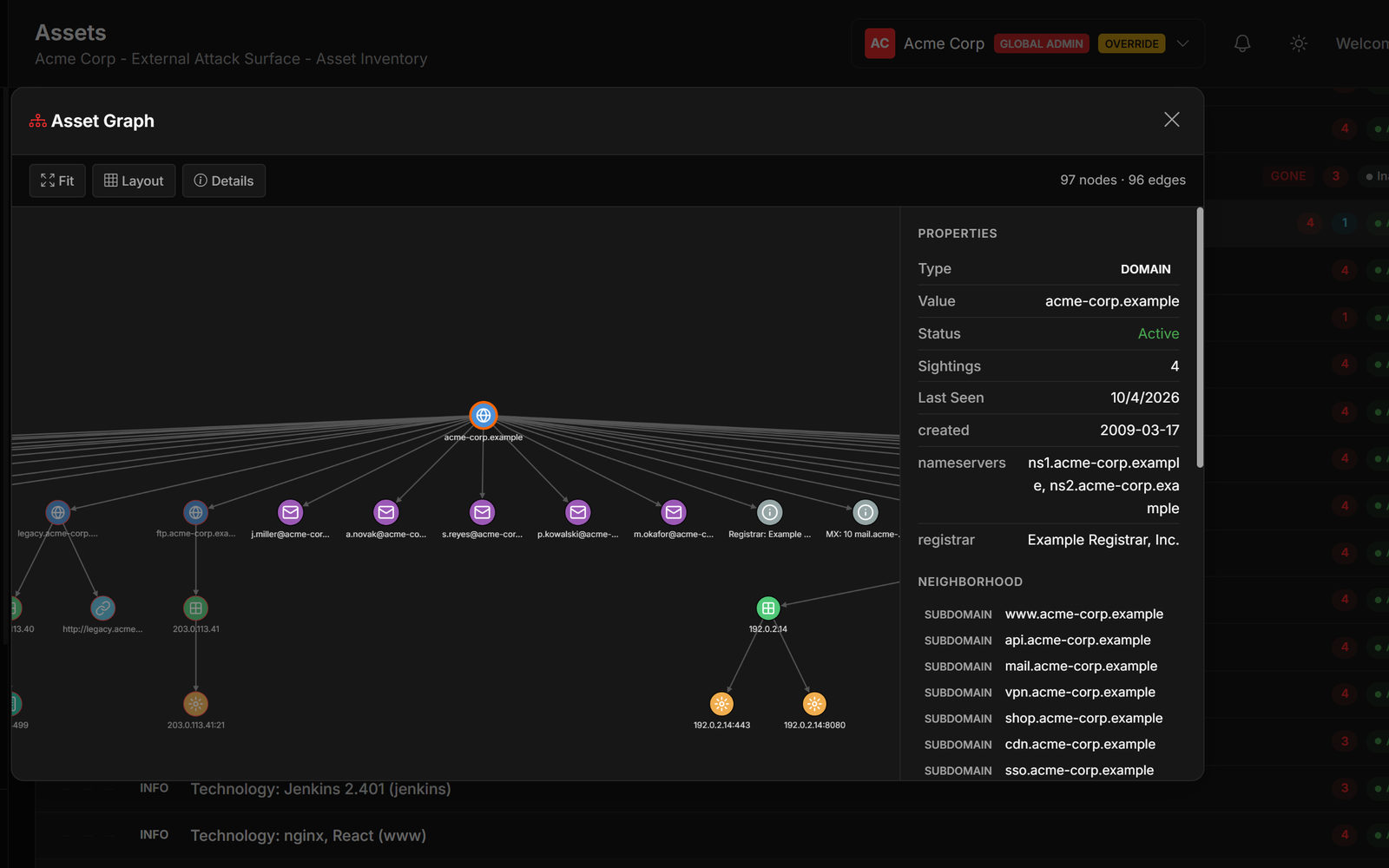 97 nodes · 96 edges
Know which assets deserve a closer look.
Discovery feeds findings, scored by severity and grouped by category, with the scope, the tool that found it and when it was first and last seen.
- Severity & category: exposure, misconfiguration, cryptography and more.
- Evidence attached: every finding names the asset and the check behind it.
- Status tracking: open, acknowledged or fixed, per finding.
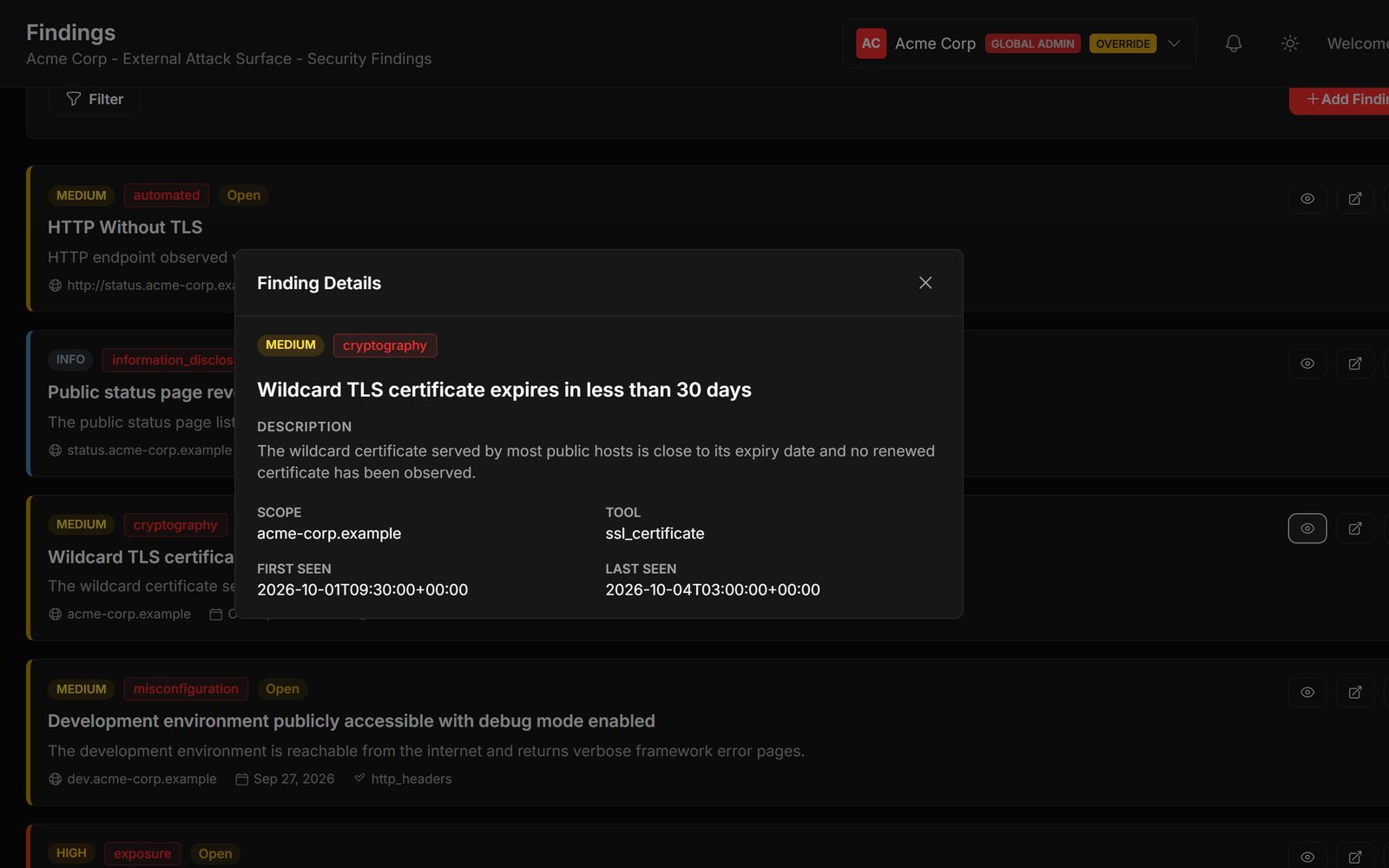 Scored by severity
You decide what's in scope.
Scopes define where discovery starts. Exclusions keep assets you don’t own, or don’t want touched, out of scanning and asset discovery entirely.
- Scope per project: one perimeter per business unit, brand or client.
- Exclusions: left out of scanning and discovery, by design.
- Agentless: nothing to install on your endpoints.
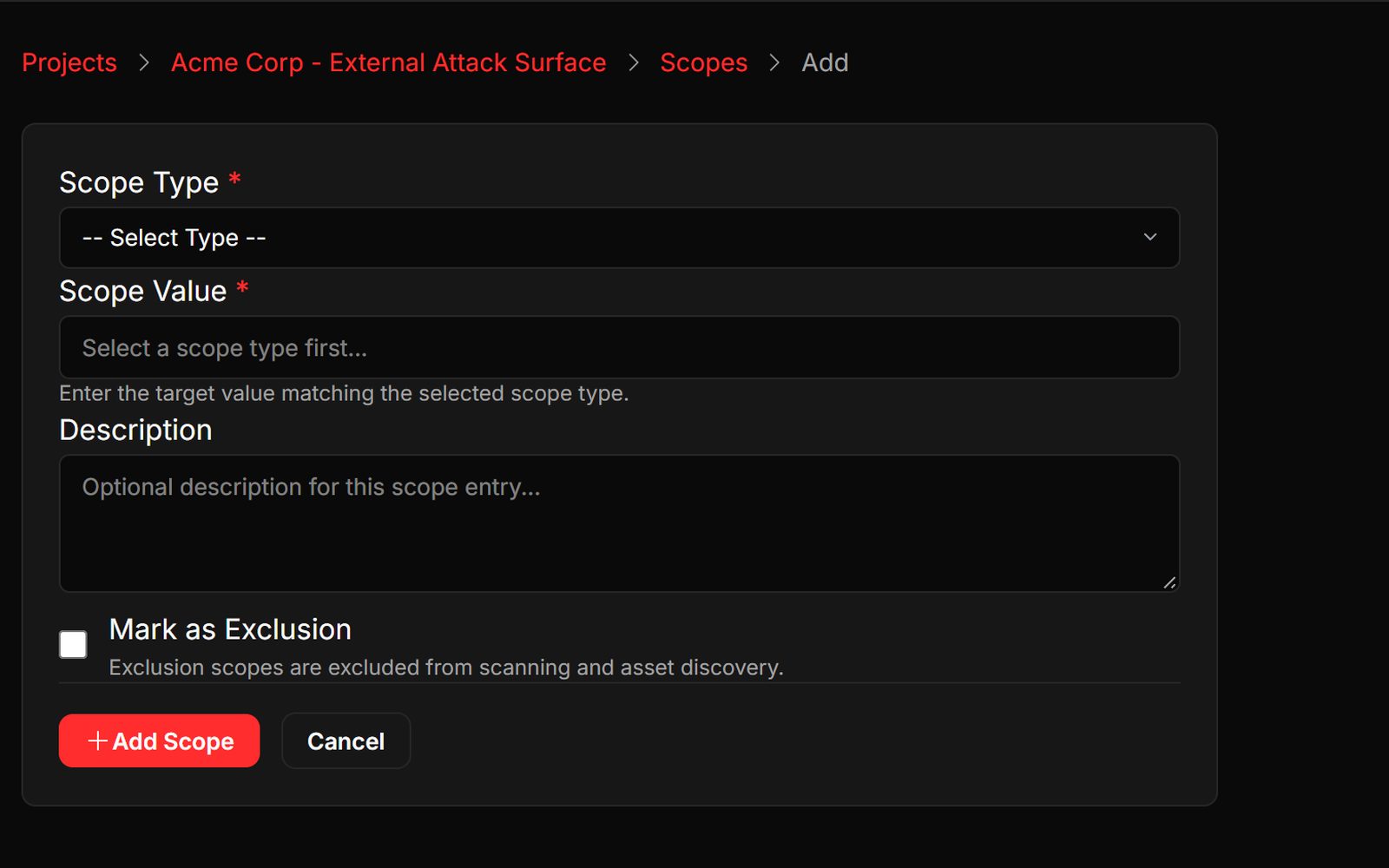 Exclusions built in
Why external asset discovery matters.
Fewer blind spots
Unknown assets fall outside monitoring and review. Discovery brings them back in.
Clearer risk picture
A complete view of public-facing assets leads to a better understanding of risk.
Sharper priorities
Teams focus validation and remediation where it matters most.
A base for monitoring
An accurate inventory is the foundation for continuous attack surface management.
Discovery is where it starts.
What do we need to get started?
A root domain. Add it as a scope in a Surface project and discovery takes it from there.
Is this agentless?
Yes. Discovery and monitoring work without endpoint agents, so you can start in minutes.
Can we keep assets out of discovery?
Yes. Mark a scope as an exclusion and it is left out of scanning and asset discovery.
How often is the inventory refreshed?
Scans run on the schedule you set, for example weekly or monthly, and you can trigger one on demand at any time.
What happens to assets that disappear?
They stay in the inventory as inactive, with sightings and last-seen dates, so you can confirm they are really gone.
Find the assets you forgot about.
Start from one domain and see your external attack surface the way an attacker would.